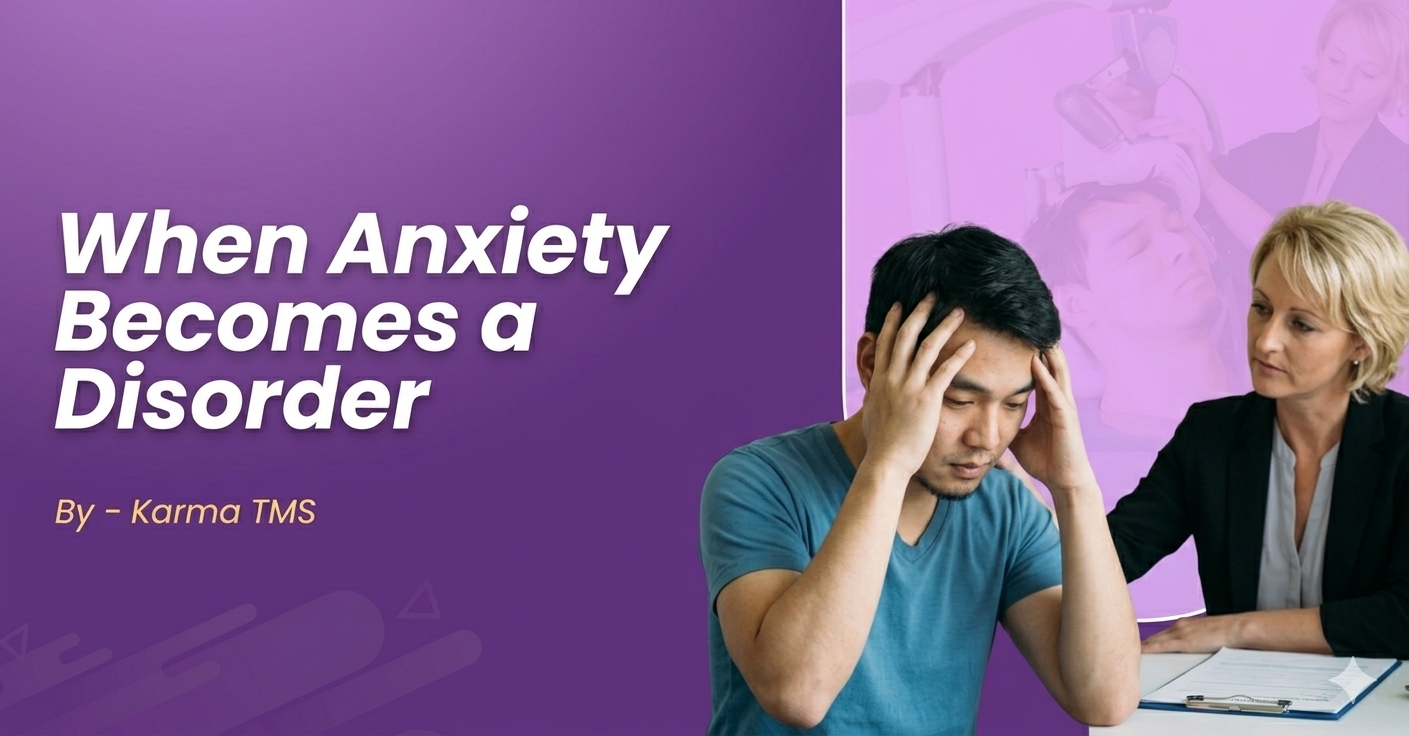
A racing heart before a job interview. Knots in your stomach on the morning of a big presentation. Worry about a loved one traveling in bad weather. These are all perfectly normal, healthy expressions of anxiety — the body and mind's built-in alarm system that has helped humans survive for millennia.
But for approximately 40 million adults in the United States — nearly 20% of the adult population — anxiety has crossed a critical line, according to the Anxiety and Depression Association of America (ADAA). It has moved from being a useful protective mechanism into a disorder: excessive, persistent, hard to control, and significantly impairing daily life.
Knowing which side of that line you are on makes an enormous practical difference. Anxiety disorders are highly treatable — but only when recognized and addressed. This guide walks you through the clinical distinctions, warning signs, types, and the full spectrum of treatment options available in 2026.
After reading this guide, you will understand:
- The clinical line between normal anxiety and a disorder
- The specific warning signs to watch for
- The 6 most common anxiety disorders
- Modern treatment options including TMS
Normal Anxiety vs. Anxiety Disorder: Where's the Line?
Both normal anxiety and anxiety disorders involve fear, worry, and physiological arousal (heart racing, muscle tension, shallow breathing). The difference lies in proportion, persistence, and impairment.
| Feature | ✅ Normal Anxiety | ⚠️ Anxiety Disorder |
|---|---|---|
| Trigger | Identifiable real stressor | Often absent, exaggerated, or imagined |
| Duration | Temporary; resolves with the situation | Persistent (6+ months in most diagnoses) |
| Proportionality | Proportionate to actual threat | Disproportionate to actual threat |
| Control | Person can manage/redirect it | Difficult or impossible to control |
| Daily Functioning | Not significantly impaired | Significantly disrupts work, relationships, health |
| Avoidance | Minimal to none | Often leads to significant avoidance behaviors |
According to the DSM-5, an anxiety disorder diagnosis requires that the anxiety is excessive, difficult to control, present for the required duration, and causes clinically significant distress or impairment in social, occupational, or other important areas of functioning.
Warning Signs That Your Anxiety Has Become a Disorder
The following signs suggest that what you're experiencing has moved beyond normal, healthy anxiety and may warrant a professional clinical evaluation:
Worry You Cannot Turn Off
You worry excessively about multiple areas of life (health, finances, relationships, work) even when there's no concrete reason to, and you find it nearly impossible to redirect your thoughts.
Physical Symptoms Without Medical Cause
Chronic muscle tension, headaches, gastrointestinal distress, chest tightness, or fatigue that your doctor cannot attribute to a medical condition are very common physical manifestations of anxiety disorders.
Avoidance That Shrinks Your Life
You avoid situations, places, people, or activities because of fear or anticipated anxiety. Over time, this avoidance circle grows, and your world becomes progressively smaller.
Panic Attacks
Sudden, intense surges of fear accompanied by physical symptoms (racing heart, shortness of breath, dizziness, numbness) that peak within minutes. Even one panic attack can trigger anticipatory anxiety about future attacks.
Sleep Disruption
Difficulty falling or staying asleep due to racing thoughts, worry, or heightened physical arousal. Chronic sleep deprivation then feeds and amplifies anxiety in a destructive cycle.
Impaired Daily Functioning
Your anxiety is significantly interfering with your ability to do your job, maintain relationships, care for yourself, or enjoy your life. This functional impairment is a key clinical threshold indicator.
Duration of 6+ Months
For most anxiety disorder diagnoses, the DSM-5 requires symptoms to be present for at least 6 months. If your anxiety has been chronic and persistent for this period, a formal evaluation is warranted.
Using Substances to Cope
Regularly using alcohol, cannabis, or other substances to manage anxiety is a strong warning sign. Self-medication provides temporary relief but worsens anxiety over time and carries its own serious risks.
The 6 Most Common Types of Anxiety Disorders
Anxiety disorders are not a single condition — they are a family of related but distinct diagnoses. Here are the most prevalent:
1. Generalized Anxiety Disorder (GAD)
Core feature: Excessive, uncontrollable worry about multiple everyday topics (health, money, work, family) on more days than not for at least 6 months.
GAD is among the most common anxiety disorders, affecting approximately 6.8 million American adults. People with GAD often describe it as their mind "always looking for something to worry about." Physical symptoms include muscle tension, fatigue, headaches, and sleep disruption.
2. Panic Disorder
Core feature: Recurrent, unexpected panic attacks followed by persistent concern about future attacks or significant behavioral change due to attacks.
A panic attack is an abrupt surge of intense fear with symptoms that peak within minutes: heart palpitations, sweating, trembling, shortness of breath, chest pain, dizziness, and a feeling of losing control or dying. After attacks, many people develop significant avoidance of situations they fear might trigger another episode.
3. Social Anxiety Disorder (Social Phobia)
Core feature: Intense, persistent fear of social or performance situations in which the person fears they will be scrutinized, judged, humiliated, or embarrassed.
Social anxiety disorder is far more than shyness. It can prevent people from attending social events, speaking up at work, eating in public, making phone calls, or forming relationships. It affects approximately 15 million adults in the US and often develops in adolescence.
4. Specific Phobias
Core feature: Marked, excessive, and persistent fear of a specific object or situation (heights, flying, needles, animals, blood, etc.) that is disproportionate to the actual danger.
Specific phobias are the most prevalent anxiety disorders globally, affecting 12.5% of Americans at some point. Exposure to or anticipation of the phobic stimulus provokes an immediate anxiety response, often leading to significant avoidance that impairs daily life.
5. Agoraphobia
Core feature: Marked fear or anxiety about two or more situations where escape might be difficult or help might be unavailable if panic symptoms occur (public transport, open/enclosed spaces, crowds, being outside alone).
Contrary to popular belief, agoraphobia is not simply "fear of open spaces." It is a complex disorder centered on the fear of being trapped or unable to escape during a panic attack. In severe cases, people become unable to leave their homes at all.
6. Separation Anxiety Disorder
Core feature: Excessive fear or anxiety concerning separation from attachment figures, disproportionate to developmental level.
While commonly associated with children, separation anxiety disorder also affects adults. Adults with this condition experience excessive worry about something bad happening to loved ones when apart, persistent reluctance to go out due to fear of separation, and nightmares about separation.
What Causes Anxiety Disorders?
Anxiety disorders are multifactorial — no single cause explains them. Current research points to a complex interplay of:
Genetics
Anxiety disorders run in families. Twin studies suggest a heritability of approximately 30–40% for generalized anxiety. Having a first-degree relative with an anxiety disorder increases your risk significantly.
Brain Chemistry & Structure
Dysregulation in neurotransmitter systems (serotonin, GABA, norepinephrine) and overactivity in the amygdala (the brain's fear center) are consistently associated with anxiety disorders, as shown in neuroimaging studies.
Trauma & Life Experience
Adverse childhood experiences (ACEs), trauma, prolonged stress, abuse, neglect, and major life transitions all substantially increase anxiety disorder risk. Trauma memory consolidation can sensitize the fear circuits permanently.
Personality & Temperament
Individuals with behavioral inhibition in childhood (shy, easily startled, risk-averse) have higher rates of anxiety disorders in adulthood. Perfectionism, neuroticism, and high harm-avoidance are also risk-factor traits.
The Risks of Leaving Anxiety Disorders Untreated
The National Institute of Mental Health estimates that anxiety disorders are among the most undertreated mental health conditions despite being among the most treatable. Delaying care carries serious consequences:
- Co-occurring depression: Up to 50% of people with an anxiety disorder also develop major depression. The two conditions worsen each other when untreated simultaneously.
- Substance misuse: Many individuals with untreated anxiety turn to alcohol or drugs for relief. Approximately 20% of people with anxiety disorders have a co-occurring substance use disorder.
- Physical health deterioration: Chronic anxiety activates the HPA axis and sympathetic nervous system continuously, contributing to hypertension, cardiovascular disease, a weakened immune system, and gastrointestinal disorders.
- Social isolation: Avoidance behaviors compound over time, progressively limiting social connection, career advancement, and quality of life.
- Worsening disorder severity: Untreated anxiety typically does not resolve on its own — it tends to worsen or expand into additional anxiety domains over time without clinical intervention.
Effective Treatment Options for Anxiety Disorders
Anxiety disorders respond very well to evidence-based treatment — especially when addressed early. The most effective approaches include:
Cognitive-Behavioral Therapy (CBT)
CBT is the gold-standard psychotherapy for anxiety disorders, with the strongest evidence base across all disorder types. It involves identifying and restructuring distorted thought patterns, and gradually confronting feared situations through exposure therapy to reduce avoidance.
Medication
SSRIs (selective serotonin reuptake inhibitors) and SNRIs are first-line pharmacological treatments for most anxiety disorders. Buspirone, beta-blockers, and short-term benzodiazepines may also be used in specific circumstances. Expert medication management ensures optimal drug selection and dosing.
Lifestyle Interventions
Regular aerobic exercise (shown to reduce anxiety significantly in clinical trials), sleep hygiene improvement, caffeine and alcohol reduction, mindfulness/meditation practices, and structured stress management techniques all provide meaningful complementary support.
TMS Therapy
For anxiety that hasn't adequately responded to medication and therapy, TMS therapy for anxiety is an increasingly studied and used option, particularly for anxiety co-occurring with depression. TMS for OCD has received FDA clearance. See the dedicated section below for more detail.
TMS Therapy for Anxiety: What the Evidence Shows
Transcranial Magnetic Stimulation (TMS) is best known for its FDA-cleared use in major depressive disorder, but a growing body of research supports its role in anxiety treatment as well.
TMS for OCD
TMS received FDA clearance for OCD (Deep TMS) in 2018. Studies show significant reduction in obsessive-compulsive symptoms, with response rates around 38% in controlled trials — meaningful for a notoriously treatment-resistant condition.
TMS for GAD & PTSD Anxiety
Research published in peer-reviewed journals shows TMS targeting the right dorsolateral prefrontal cortex (DLPFC) reduced anxiety symptoms in GAD patients. For PTSD-related anxiety, TMS for veterans has demonstrated significant promise.
Comorbid Anxiety + Depression
Since anxiety disorders co-occur with depression in up to 50% of cases, and TMS is proven effective for depression, many patients find that TMS treatment for depression simultaneously improves their anxiety symptoms — a significant dual benefit.
PrTMS for Personalized Care
PrTMS (Personalized rTMS) uses EEG brain mapping to customize stimulation parameters to the patient's unique neural signature, potentially offering improved anxiety outcomes compared to standard one-size-fits-all TMS protocols.
At Karma TMS in Palm Springs and Rancho Mirage, we evaluate each patient's specific anxiety profile and design a personalized treatment plan that may include TMS, PrTMS, medication management, and coordination with your therapy team. Contact us for a free consultation.
Frequently Asked Questions About Anxiety Disorders
Anxiety Is Treatable — You Don't Have to Live This Way
If your anxiety has been controlling your life, our team of psychiatrists in Palm Springs can help you find the right diagnosis and personalized treatment plan. Your free consultation is the first step.
Related Articles
Does TMS Therapy Work for Anxiety?
Discover how TMS therapy effectively treats anxiety disorders with clinical evidence.
Read More
Signs Your Depression Needs Professional Treatment
10 warning signs that your depression has crossed into clinical territory.
Read More
Depression vs Burnout: How to Tell the Difference
Learn the critical differences between burnout and clinical depression.
Read More
About the Author
Dr. Keerthy Sunder
Board-Certified Psychiatrist | KarmaTMS
Dr. Keerthy Sunder is a board-certified psychiatrist specializing in TMS therapy and integrative psychiatry. He is passionate about bringing advanced, evidence-based treatments to the Palm Springs community to help patients achieve lasting mental wellness.