
When people experience psychological trauma, they frequently ask: does PTSD cause memory loss? If you or someone you care about has survived combat, severe accidents, physical assault, prolonged emotional abuse, or medical trauma, you may have noticed troubling cognitive changes. You might forget where you placed your car keys, lose track of conversations mid-sentence, struggle to recall crucial work deadlines, or realize that large blocks of time around the traumatic event are completely missing from your conscious recall.
These cognitive disruptions are not personal failings, signs of early-onset dementia, or a lack of effort. In psychiatric medicine, we know that post-traumatic stress disorder (PTSD) is a profound neurobiological condition that physically changes the architecture of your brain. The neurochemical floodwaters of traumatic stress fundamentally alter the circuits that encode, store, and retrieve memories.
According to medical consensus outlined by major health organizations and documented on Wikipedia's Post-traumatic stress disorder clinical overview, cognitive dysfunctions—specifically memory lapses, attention deficits, and memory fragmentation—are primary diagnostic and physiological indicators of the disorder. In this physician-guided guide, Dr. Keerthy Sunder and the clinical neuropsychiatric team at Karma TMS break down why trauma causes memory loss, how chronic stress hormones reshape the hippocampus, and how innovative therapies like Transcranial Magnetic Stimulation (TMS) help patients in Palm Springs, Rancho Mirage, and Twentynine Palms reclaim cognitive function.
Direct Answer: Does PTSD Cause Memory Loss?
Yes, PTSD directly causes memory loss, working memory deficits, and memory fragmentation. Traumatic stress triggers toxic surges of cortisol and adrenaline that shrink the hippocampus (the brain’s memory-filing center), hijack the amygdala (the emotional threat detector), and exhaust the prefrontal cortex (responsible for executive focus and short-term memory). As a result, trauma survivors frequently experience short-term memory lapses, brain fog, and dissociative memory gaps.
How Trauma Alters Brain Architecture: The Neurobiology of Memory
To truly grasp why PTSD causes memory loss, one must look beneath psychological symptoms into neuroanatomy. Memory formation is not handled by a single brain component; it is an intricate neural network requiring seamless communication between three primary structures:
1 The Hippocampus: The Memory Filing Cabinet
Located within the medial temporal lobe, the hippocampus acts as the brain’s cataloger. It takes incoming sensory experiences, places them into a coherent chronological timeline (stamping them with "past," "present," or "future"), and transfers them into long-term declarative storage. In individuals suffering from PTSD, chronic hypercortisolemia (excess stress hormone) causes dendritic retraction and inhibits neurogenesis in the dentate gyrus. As a result, the hippocampus physically shrinks and loses its capacity to properly file both past memories and new daily details.
2 The Amygdala: The Hyperactive Alarm System
The amygdala governs threat assessment, fear conditioning, and autonomic fight-or-flight mobilization. In PTSD, the amygdala becomes structurally hyperactive and hypersensitive. It continuously screams that danger is imminent, flooding the nervous system with adrenaline. When the amygdala is operating in overdrive, it hijacks metabolic resources from the cognitive centers, sacrificing everyday memory encoding in favor of hypervigilant survival mode.
3 The Prefrontal Cortex (PFC): The Executive Administrator
The prefrontal cortex—specifically the dorsolateral prefrontal cortex (dlPFC) and ventromedial prefrontal cortex (vmPFC)—regulates working memory, impulse control, focused attention, and fear extinction. Under severe trauma, top-down PFC control is blunted. The prefrontal cortex loses its ability to quiet the hyperactive amygdala and fails to allocate working memory space for everyday problem-solving, making multitasking and short-term recall feel nearly impossible.
When this crucial triad falls out of synchrony, the brain stops processing reality cohesively. In our clinical work with veterans, first responders, and trauma survivors at our Palm Springs PTSD clinic, quantitative EEG (qEEG) brain mapping frequently shows these exact dysregulated connectivity patterns across prefrontal and limbic networks.
Different Types of Memory Loss Linked to PTSD
Memory loss in PTSD does not present as a uniform blank slate. Instead, trauma fragments memory into distinct cognitive categories. Recognizing which type of memory challenge you are facing helps demystify the experience and informs targeted psychiatric treatment:
| Memory Dimension | How It Manifests in PTSD | Typical Real-Life Example |
|---|---|---|
| Working / Short-Term Memory | Inability to hold and manipulate immediate information due to prefrontal bandwidth overload. | Walking into a room and forgetting why; losing the thread of a sentence mid-conversation. |
| Dissociative Amnesia | Psychogenic inability to recall essential aspects, sequences, or timeframes of the traumatic event itself. | A combat veteran or crash survivor unable to remember what happened during a 20-minute crisis window. |
| Prospective Memory | Deficits in remembering to carry out intended actions at a designated future time. | Forgetting doctor appointments, failing to take prescribed medication, or missing scheduled calls. |
| Autobiographical / Episodic | Difficulty constructing a rich narrative of past pleasant life events; feeling disconnected from your own history. | Remembering that a vacation took place, but being unable to mentally relive emotional joy or sensory warmth from it. |
| Verbal Learning & Recall | Slowed acquisition of written or spoken instructions; trouble recalling names or medical advice. | Needing instructions repeated multiple times; feeling overwhelmed by dense work emails. |
If you have been experiencing these symptoms alongside anxiety, hypervigilance, or depression, it is crucial to understand that your brain is actively compensating for trauma. For an in-depth look at how veterans manage these intersecting symptoms, explore our article on understanding PTSD in military veterans and our specialized veteran anxiety and PTSD treatment resources.
The Trauma Memory Paradox: Why You Remember the Nightmare but Forget Your Keys
One of the most distressing and perplexing aspects of living with PTSD is what neuroscientists call the Trauma Memory Paradox:
Why Is Trauma So Vivid When Daily Life Is a Blur?
Many patients ask: "If PTSD causes memory loss, why can I vividly smell the smoke, hear the sirens, and see the terrifying details of my trauma as if it happened five minutes ago, yet I can’t remember what I ate for breakfast yesterday?"
The answer lies in how memory encoding works under extreme fear. During a traumatic threat, evolutionary biology prioritizes implicit, sensory survival memory over declarative, contextual memory. The amygdala sears sensory fragments—high-contrast visuals, sharp noises, sudden scents—into primitive subcortical circuits so that your body will react instinctively to similar threats in the future. Because the hippocampus was offline, these memories never received a timestamp or contextual closure.
Because those traumatic memories lack a chronological tag, any environmental trigger (a sudden loud bang, a particular tone of voice, a crowded desert highway) causes the brain to interpret the past trauma as occurring right now in the present moment. This phenomenon creates intrusive flashbacks and nightmare loops.
Meanwhile, mundane, everyday memories require calm, rhythmic hippocampal function and robust prefrontal attention. When your brain is expending 90% of its neurochemical bandwidth searching the environment for existential threats, routine daily data simply gets dropped at the threshold of conscious awareness. You never truly "forgot" where you set your keys—your hypervigilant brain never encoded the memory in the first place.
Is PTSD Brain Fog Affecting Your Daily Life?
You don't have to navigate memory gaps, intrusive flashbacks, or mental exhaustion alone. Consult with Dr. Keerthy Sunder and our board-certified clinical team in Palm Springs, Rancho Mirage, and 29 Palms.
Cortisol, Norepinephrine & Toxic Stress: The Chemical Mechanism
To understand why PTSD causes memory loss on a microscopic cellular level, we must examine the hypothalamic-pituitary-adrenal (HPA) axis—the primary endocrine engine that commands the body’s stress response.
Under normal acute stress (such as swerving to avoid an oncoming car), the adrenal glands release adrenaline, norepinephrine, and cortisol. Once the danger passes, parasympathetic feedback loops signal the system to downregulate. But in chronic PTSD, the feedback mechanism is fractured:
- Hippocampal Neurotoxicity: The hippocampus contains the highest concentration of glucocorticoid (cortisol) receptors in the human brain. Sustained elevation of cortisol over weeks, months, or years exerts a toxic effect on CA3 pyramidal neurons, causing dendritic atrophy, loss of synaptic spines, and reduced expression of brain-derived neurotrophic factor (BDNF).
- Norepinephrine Flood: Excessive adrenergic signaling continually locks the brain into fight-or-flight hyperarousal. High norepinephrine levels impair the signal-to-noise ratio in the prefrontal cortex, leading to distractibility, mental exhaustion, and degraded working memory.
- Systemic Neuroinflammation: Chronic autonomic distress elevates pro-inflammatory cytokines (such as IL-6 and TNF-alpha) that cross the blood-brain barrier. Neuroinflammation degrades synaptic plasticity, directly contributing to the heavy, persistent brain fog reported by trauma survivors.
- Severe Sleep Architecture Disruption: Traumatic nightmares, night sweats, and hypervigilant insomnia deprive the brain of restorative slow-wave deep sleep and rapid eye movement (REM) sleep. Because memory consolidation—transferring short-term memories into durable long-term storage—occurs primarily during uninterrupted deep sleep, sleep deprivation compounds memory degradation exponentially.
When PTSD co-occurs with clinical depression or generalized anxiety, these neurochemical strains multiply. To learn more about how mood disorders interface with brain chemistry, see our analysis on depression treatment pathways and comprehensive anxiety care.
Can PTSD-Induced Memory Loss Be Reversed?
One of the most encouraging truths revealed by modern neuroscience is that memory loss from PTSD is largely reversible. For years, patients feared that trauma had inflicted permanent, irreversible brain damage. Today, advanced neuroimaging studies have proven that the brain possesses extraordinary lifelong neuroplasticity—the innate capacity to rewire neural pathways, sprout new dendritic connections, and regenerate hippocampal volume once toxic stress is neutralized.
Reversible PTSD Memory Deficits
- Short-term working memory fog and mental sluggishness
- Inability to concentrate during complex daily tasks
- Emotional numbing and lack of autobiographical recall
- Hippocampal volume reduction (recovers with BDNF upregulation)
- Heightened distractibility driven by sensory hypervigilance
What Requires Structured Clinical Care
- Processing fragmented dissociative trauma memories safely
- Calming chronic limbic hyperactivity and autonomic alarm states
- Restoring restorative slow-wave deep sleep patterns
- Re-synchronizing dysregulated prefrontal-limbic neural circuits
- Addressing co-occurring conditions like depression or panic disorder
When the nervous system feels safe, inflammatory cytokines drop, cortisol production normalizes, and neurotrophic factors such as BDNF rise. Under these restorative biological conditions, patients experience a profound lifting of brain fog, sharper word recall, improved focus, and renewed cognitive stamina.
Restoring Memory & Brain Function: Modern Treatment Approaches
Addressing memory loss in PTSD requires an integrative strategy that targets both psychological trauma processing and the underlying physical dysregulation in the brain. Here are the most effective clinical modalities utilized in contemporary neuropsychiatry:
1. Transcranial Magnetic Stimulation (TMS) & PrTMS
For individuals whose symptoms have not responded adequately to standard medications, Transcranial Magnetic Stimulation (TMS) offers a breakthrough non-invasive solution. TMS uses highly focused, MRI-strength magnetic pulses to stimulate neurons in specific regions of the cerebral cortex—most notably the dorsolateral prefrontal cortex (dlPFC).
How does TMS specifically improve memory in trauma patients?
- Re-engaging Executive Control: By reactivating underactive neural firing in the prefrontal cortex, TMS restores top-down cognitive inhibition over the hyperactive amygdala.
- Enhancing Neuroplasticity: Repetitive magnetic stimulation triggers long-term potentiation (LTP), encouraging synaptogenesis, strengthening synaptic connections, and boosting BDNF levels.
- Improving Brain Wave Coherence: At Karma TMS, we also utilize Personalized repetitive TMS (PrTMS), which uses individualized qEEG brain maps to deliver customized frequencies tailored to each patient’s unique brain wave profile.
- Non-Invasive with Zero Cognitive Side Effects: Unlike Electroconvulsive Therapy (ECT), which induces seizures and carries significant risks of memory amnesia, TMS is completely non-invasive, requires no sedation, and actually improves memory and cognitive clarity. Learn more about the pristine safety record of this treatment in our comprehensive analysis of how safe TMS is for mood and trauma disorders.
2. Evidence-Based Trauma Psychotherapies
Neuromodulation works synergistically with trauma-focused psychotherapies. Once TMS calms the nervous system's acute panic response, patients are significantly better equipped to engage in therapeutic processing without becoming overwhelmed:
- EMDR (Eye Movement Desensitization and Reprocessing): Uses bilateral stimulation to help the hippocampus properly file fragmented, unintegrated traumatic memories into past long-term storage.
- Cognitive Processing Therapy (CPT): A specialized cognitive behavioral framework that targets "stuck points"—unhelpful beliefs regarding safety, trust, control, and esteem born out of trauma.
- Prolonged Exposure (PE): Helps desensitize trauma-related triggers so that environmental cues no longer provoke acute memory hijacking and adrenaline floods.
3. Integrative Lifestyle Neuroprotection
Physical brain healing is amplified by daily neuroprotective habits. Prioritizing consistent 7–9 hour sleep schedules, adopting an anti-inflammatory Mediterranean-style nutrition plan rich in omega-3 fatty acids, engaging in daily aerobic exercise to stimulate hippocampal neurogenesis, and practicing mindfulness meditation all provide the foundational biochemistry needed for memory recovery. To discover how brain stimulation interacts with lifestyle neurobiology, read our guide on what happens to your brain during TMS therapy.
Navigating Recovery: Comprehensive Care Options for Trauma & Memory Loss
Living with PTSD-related memory loss can make work, family responsibilities, and everyday life feel overwhelming. However, compassionate, world-class psychiatric care is available close to home.
Under the leadership of Dr. Keerthy Sunder, an internationally recognized psychiatrist and neuromodulation expert, Karma TMS provides comprehensive psychiatric evaluations, qEEG brain mapping, medication management, and advanced PrTMS therapy across three state-of-the-art Southern California clinics:
Personalized Neuromodulation Center
Serving Palm Springs, Cathedral City, Desert Hot Springs, and surrounding communities with private, patient-centered neuromodulation.
Advanced Psychiatric & Cognitive Evaluations
Conveniently located for residents of Rancho Mirage, Palm Desert, Indian Wells, and La Quinta seeking cutting-edge mental health solutions.
Specialized Veteran & First Responder Support
Dedicated trauma and veteran mental health support serving MCAGCC 29 Palms, Yucca Valley, Joshua Tree, and Morongo Basin.
We accept major commercial health insurances, Medicare, and TRICARE for eligible active-duty service members and military veterans. Our compassionate team handles insurance pre-authorization directly so you can focus entirely on cognitive recovery and healing.
Conclusion: Moving Beyond Trauma-Induced Brain Fog
Living with post-traumatic stress disorder can feel like navigating an unpredictable mental fog. When names, daily appointments, or everyday conversations slip away, it is easy to feel frustrated, misunderstood, or anxious that you are losing your cognitive faculties permanently.
However, modern neuropsychiatry provides both scientific validation and profound hope. PTSD does cause memory loss, but not because of a character flaw or a progressive neurodegenerative condition like dementia. Instead, your brain has been trapped in a continuous survival loop—allocating its metabolic energy toward monitoring threats while short-circuiting the neural pathways required for routine memory encoding and recall.
Because the human brain possesses lifelong neuroplasticity, this cognitive impairment is not permanent. By calming amygdala hyperarousal, mitigating chronic cortisol toxicity, and re-engaging the prefrontal cortex through advanced therapies like TMS and PrTMS alongside specialized trauma psychotherapy, you can re-synchronize your neural circuits, rebuild memory retention, and restore cognitive sharpness.
If traumatic stress is clouding your memory or interfering with your daily life, seeking a specialized psychiatric evaluation is the first step toward lasting cognitive recovery and peace of mind.

About the Author
Dr. Keerthy Sunder
Board-Certified Psychiatrist | Karma TMS
Dr. Keerthy Sunder is a board-certified psychiatrist, neuromodulation specialist, and medical director of Karma TMS. With decades of clinical experience in integrative psychiatry, trauma recovery, and repetitive Transcranial Magnetic Stimulation (rTMS), Dr. Sunder is dedicated to helping patients overcome trauma-induced cognitive fog, PTSD, and treatment-resistant mood disorders throughout Palm Springs, Rancho Mirage, and the High Desert.
Frequently Asked Questions About PTSD and Memory Loss
Here are direct, evidence-based answers to the most common questions trauma survivors and their families ask regarding PTSD and cognitive function:
Ready to Reclaim Mental Clarity and Overcome PTSD?
You do not have to live in the fog of traumatic stress. Dr. Keerthy Sunder and the specialized team at Karma TMS provide personalized, evidence-based care in Palm Springs, Rancho Mirage, and 29 Palms.
Related Articles

Understanding PTSD in Veterans
Explore the complexities of PTSD in military veterans, its impact on the brain, and how innovative therapies bring lasting relief.
Read More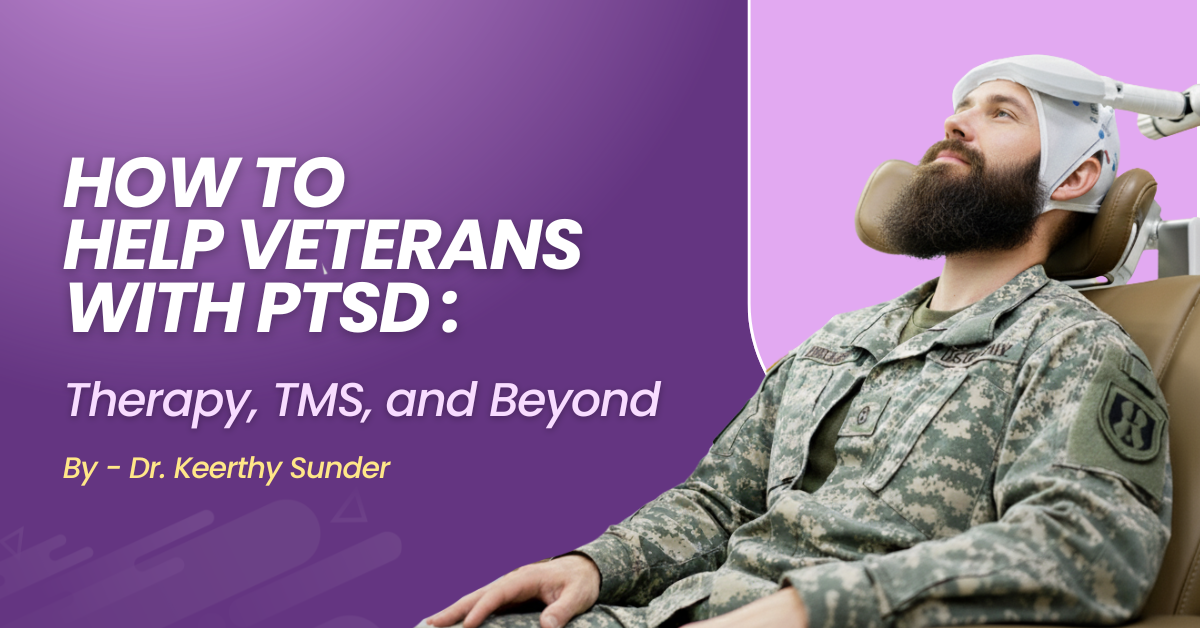
How to Help Veterans with PTSD
Discover practical, trauma-informed strategies to support loved ones coping with PTSD, intrusive triggers, and emotional exhaustion.
Read More
TMS for Anxiety & PTSD in Veterans
Learn how advanced non-invasive neuromodulation calms amygdala hyperarousal and restores brain regulation in veterans and trauma survivors.
Read More