
When coping with the exhaustion, cognitive fog, and persistent low mood of clinical depression, the last thing anyone wants to stress over is a confusing financial spreadsheet. Yet, one of the most pressing questions individuals and families ask when seeking help is: "How much does depression treatment cost?"
According to medical definitions documented in the Major Depressive Disorder article on Wikipedia, clinical depression is a widespread, debilitating neurobiological disorder that impacts mood, sleep, physical vitality, relationships, and workplace productivity. Despite its high prevalence, financial uncertainty remains one of the single greatest barriers preventing patients from accessing timely, evidence-based care.
The true cost of depression treatment is not a single static number. It depends heavily on the severity of your symptoms, whether you have health insurance, your deductible, and the specific modality you choose—ranging from traditional psychotherapy and psychiatric pharmaceuticals to modern, FDA-cleared neuromodulation like Transcranial Magnetic Stimulation (TMS).
In this definitive 2026 guide, Dr. Keerthy Sunder and the psychiatric team at Karma TMS break down every aspect of depression treatment pricing. We analyze out-of-pocket costs, explore insurance coverage (including Medicare and TRICARE), compare long-term medication costs against TMS therapy, and detail local options for residents in Palm Springs, Rancho Mirage, and 29 Palms.
1. Detailed Breakdown: Costs by Depression Treatment Modality
Effective mental health care encompasses multiple therapeutic approaches. Below is an itemized breakdown of what you can expect to pay across the primary depression treatment modalities in 2026:
A. Psychotherapy & Talk Therapy (CBT, DBT, Psychodynamic)
Psychotherapy is widely considered a cornerstone first-line intervention for mild to moderate depression. Common modalities include Cognitive Behavioral Therapy (CBT) and Dialectical Behavior Therapy (DBT).
- Self-Pay (Without Insurance): Costs typically range from $100 to $250 per 50-minute session, depending on the therapist's credentials (LMFT, LCSW, or licensed Clinical Psychologist) and geographic location. In high-cost regions of Southern California, specialized psychologists may charge upwards of $300 per session.
- With In-Network Insurance: Patients typically pay a copay between $15 and $50 per session once their annual medical deductible has been satisfied.
- Annualized Cost: For weekly sessions over one year (52 weeks), self-pay therapy totals $5,200 to $13,000 annually, while insured copays generally total $780 to $2,600.
B. Psychiatric Evaluation & Medication Management
Medication management involves consultations with a licensed psychiatrist (MD or DO) or psychiatric nurse practitioner (PMHNP) to evaluate, prescribe, and adjust antidepressant medications.
- Initial Psychiatric Evaluation: An initial 60-to-90 minute intake session generally costs between $300 and $600 out-of-pocket ($30 to $75 with in-network insurance).
- Follow-Up Medication Checks: Brief 15-to-30 minute appointments occur every 4 to 8 weeks and cost $150 to $300 self-pay ($20 to $50 copay).
- Prescription Drug Expenses: Generic SSRIs and SNRIs (such as Sertraline, Escitalopram, or Venlafaxine) cost roughly $10 to $40 per month. However, branded antidepressants, novel multimodal drugs, or adjunctive mood stabilizers can range from $200 to $1,200+ per month without insurance.
- Annualized Cost: A typical year of medication and regular psychiatric oversight averages $2,500 to $7,000 without insurance, or $400 to $1,500 with comprehensive insurance.
C. Transcranial Magnetic Stimulation (TMS Therapy)
Transcranial Magnetic Stimulation (TMS) is an FDA-cleared, non-invasive, non-drug therapy that uses targeted magnetic pulses to stimulate underactive neurons in the brain's dorsolateral prefrontal cortex (the region controlling mood and emotion regulation). It is primarily prescribed for treatment-resistant depression.
- Self-Pay (Out-of-Pocket): A full standard course of TMS (typically 36 sessions over 6 to 9 weeks) ranges between $6,000 and $12,000 nationwide ($170 to $300 per session). Advanced protocols such as Personalized rTMS (PrTMS) incorporate quantitative EEG brain mapping for custom-tailored frequencies.
- With Health Insurance: TMS therapy is covered by almost every major commercial insurance plan (Anthem Blue Cross, Aetna, Cigna, Blue Shield of California, UnitedHealthcare), as well as Medicare and TRICARE. For insured patients who meet clinical qualification criteria, the out-of-pocket expense is usually limited to their standard specialist copay ($15 to $50 per session) or $0 once their annual maximum out-of-pocket (MOOP) is reached.
Why TMS Has a Definitive Financial Horizon:
Unlike medications that require continuous monthly purchases indefinitely, standard TMS therapy is an intensive, finite clinical program. Clinical data reveals that over 70% of patients experience significant symptom reduction, and approximately 50% achieve full clinical remission, eliminating or dramatically reducing ongoing mental healthcare expenses. Learn more about TMS therapy costs in the US.
D. Intensive Outpatient Programs (IOP) & Partial Hospitalization (PHP)
For acute depression requiring structured, multi-hour daily support without 24-hour residential stays, Intensive Outpatient (IOP) and Partial Hospitalization (PHP) programs provide group therapy, individual counseling, and medical monitoring.
- IOP Costs: Typically $250 to $700 per day (average program duration: 6 to 12 weeks, costing $7,500 to $20,000 total).
- PHP Costs: Typically $700 to $1,500 per day (average program duration: 2 to 4 weeks, costing $10,000 to $30,000 total).
- Insurance Coverage: Insurers often cover IOP and PHP when deemed medically necessary, though deductibles and 10% to 30% coinsurance may apply.
E. Inpatient Psychiatric Hospitalization & Residential Care
Inpatient hospitalization is reserved for psychiatric emergencies, severe crisis stabilization, or acute safety concerns.
- Daily Rates: Inpatient psychiatric facilities cost between $1,000 and $2,500+ per day.
- Average Stay: A standard 5-to-10 day inpatient stabilization stay averages $8,000 to $25,000 before insurance.
- Residential Treatment Centers: 30-day private residential mental health retreats cost between $20,000 and $60,000+ per month, often with limited insurance reimbursement.
Unsure What Your Insurance Will Cover?
Every policy has unique deductibles and copays. Contact Karma TMS for a confidential, zero-obligation insurance benefits verification today.
2. Comprehensive Depression Treatment Cost Comparison Table
Comparing the direct out-of-pocket costs, time commitments, and insurance accessibility of each treatment allows you to make an informed, empowered decision:
| Treatment Modality | Estimated Cost (Self-Pay) | Estimated Cost (With Insurance) | Duration / Frequency | Long-Term Financial Trajectory |
|---|---|---|---|---|
| Outpatient Psychotherapy (CBT) | $100 – $250 / session ($5,200 – $13,000/yr) |
$15 – $50 copay / session ($780 – $2,600/yr) |
Weekly (6 to 24+ months) | Ongoing recurring cost; highly effective maintenance when paired with biological care. |
| Psychiatric Meds & Oversight | $150 – $400 / month ($1,800 – $4,800/yr) |
$20 – $80 / month copays ($240 – $960/yr) |
Daily medication + regular doctor check-ins | Indefinite recurring expense; trial-and-error switching can escalate diagnostic and pharmaceutical costs. |
| TMS Therapy (Standard FDA Protocol) | $6,000 – $12,000 total course ($170 – $300 / session) |
$15 – $50 copay / session ($0 after out-of-pocket max met) | 36 daily 20-min sessions over 6 to 9 weeks | Finite upfront investment. High remission rates reduce future healthcare and medication utilization. |
| Intensive Outpatient Program (IOP) | $7,500 – $20,000 per program | $500 – $3,000 (deductible / coinsurance) | 3–5 days/week, 3 hrs/day (6–12 weeks) | Short-term acute intervention; typically followed by step-down outpatient therapy. |
| Inpatient Psychiatric Hospitalization | $1,000 – $2,500 / day ($10,000 – $25,000 per stay) |
$500 – $4,000 (after meeting deductible) | 3 to 14 days acute crisis stabilization | Crisis stabilization only; does not replace long-term curative outpatient treatment plans. |
4. How Health Insurance, Medicare & TRICARE Cover Depression Treatment
Under the Mental Health Parity and Addiction Equity Act (MHPAEA) and the Affordable Care Act (ACA), health insurance companies are legally mandated to provide behavioral health benefits that are comparable to standard medical and surgical benefits.
A. Commercial Insurance Coverage (Aetna, Anthem, Blue Shield, Cigna, UnitedHealthcare)
Most private commercial policies offer robust coverage for depression treatment. However, your out-of-pocket costs will depend on three key insurance components:
- Deductible: The amount you must pay out-of-pocket each calendar year before your insurance begins covering services. (Once met, your costs drop significantly).
- Copayment / Coinsurance: A flat dollar fee (e.g., $30 per therapy or TMS session) or a percentage (e.g., 10% to 20% coinsurance) per visit.
- Out-of-Pocket Maximum (OOP Max): The absolute cap on what you will pay during a benefit year. Once you reach this threshold, insurance covers 100% of all covered medical and mental health services.
For in-depth details on how insurers evaluate coverage criteria, visit our guide on is TMS therapy covered by insurance.
B. Medicare Depression Coverage in California
Medicare Part B covers outpatient mental health visits, annual depression screenings, psychotherapy, and psychiatric evaluations. Additionally, Medicare routinely covers TMS therapy for patients diagnosed with Major Depressive Disorder who have failed to achieve remission from at least one or more antidepressant medications. After meeting the Part B deductible, Medicare typically pays 80% of the approved amount, with supplemental plans (Medigap) or secondary insurance covering the remaining 20%.
C. TRICARE Coverage for Veterans & Active Military
Active duty personnel, reservists, retirees, and military families stationed at the Marine Corps Air Ground Combat Center in Twentynine Palms (29 Palms) or living across Riverside County have comprehensive mental health benefits under TRICARE. TRICARE covers psychotherapy, medication management, and TMS therapy with minimal or $0 copays for active-duty personnel. Review our dedicated guide to TRICARE TMS coverage requirements.
5. Treatment-Resistant Depression: Why Advanced Care Like TMS Is Cost-Effective
Approximately one-third of individuals diagnosed with Major Depressive Disorder suffer from Treatment-Resistant Depression (TRD)—defined clinically as failing to achieve significant improvement after trying two or more adequate antidepressant medication trials.
The landmark STAR*D Trial (the largest prospective depression clinical study conducted by the National Institute of Mental Health) revealed a critical clinical reality:
- Trial 1 (First Antidepressant): ~37% remission rate
- Trial 2 (Second Antidepressant): ~31% remission rate
- Trial 3 (Third Antidepressant): ~14% remission rate
- Trial 4 (Fourth Antidepressant): <13% remission rate
As response rates plunge with each subsequent pharmaceutical trial, direct healthcare costs escalate by more than 300% due to frequent dosage adjustments, supplemental medications, and lost productivity.
The Economic Advantage of Transcranial Magnetic Stimulation:
Because TMS works directly through neuro-magnetic stimulation rather than bloodstream chemistry, its success rate does not drop following multiple medication failures. By restoring healthy neural oscillations, TMS often helps patients achieve full remission, breaking the expensive cycle of endless prescription switches. You can also explore how long TMS takes to work for depression to understand treatment timelines.
6. Depression Treatment Costs in Palm Springs, Rancho Mirage, and 29 Palms
Healthcare expenses in the Coachella Valley and Morongo Basin are influenced by local clinic accessibility, network partnerships, and specialized psychiatric providers. At Karma TMS, we operate state-of-the-art mental health centers dedicated to providing transparent, accessible care across Riverside and San Bernardino counties:
Serving downtown Palm Springs, Cathedral City, and Desert Hot Springs. We offer comprehensive psychiatric consultations, TMS therapy, and depression recovery protocols.
Palm Springs LocationConveniently located for patients across Rancho Mirage, Palm Desert, Indian Wells, and La Quinta, providing cutting-edge TMS and personalized mental wellness plans.
Rancho Mirage LocationProudly serving our military community, veterans, and High Desert residents in Twentynine Palms, Yucca Valley, and Joshua Tree with TRICARE & Medicare-approved TMS care.
29 Palms LocationWhether you are seeking TMS therapy for depression in Palm Springs, exploring innovative non-drug options in Rancho Mirage, or utilizing TRICARE benefits in 29 Palms, our billing coordinators work directly with your insurer to minimize your personal out-of-pocket obligations. Learn more on our insurance and pricing overview page.
7. How to Lower Your Out-of-Pocket Depression Treatment Costs
Navigating healthcare finances can feel daunting, but strategic planning can substantially decrease your overall expenses:
- 1. Utilize Pre-Tax HSA / FSA Accounts: You can pay for therapy sessions, psychiatric copayments, prescription medications, and TMS therapy using tax-advantaged Health Savings Accounts (HSA) or Flexible Spending Accounts (FSA), effectively saving 20% to 35% based on your tax bracket.
- 2. Request In-Network Prior Authorizations: At Karma TMS, our experienced insurance team compiles detailed clinical documentation and manages all prior authorizations and appeals to secure maximum carrier reimbursement on your behalf.
- 3. Inquire About Medical Financing (CareCredit): For self-pay options or deductible financing, interest-free promotional payment plans allow you to spread treatment costs over 6 to 24 manageable monthly installments.
- 4. Leverage Manufacturer Co-Pay Cards: If you are prescribed brand-name antidepressants, manufacturer savings programs often reduce monthly copays to as low as $10 to $25.
- 5. Explore Superbills & Out-of-Network Reimbursement: If your preferred therapist is out-of-network, ask for monthly "superbills" that you can submit to your PPO insurance for direct partial reimbursement (often 50% to 80% after deductible).
8. Frequently Asked Questions About Depression Treatment Costs
Find clear, expert answers to the most common questions regarding depression therapy pricing, insurance coverage, and TMS financing:
Related Mental Health Articles
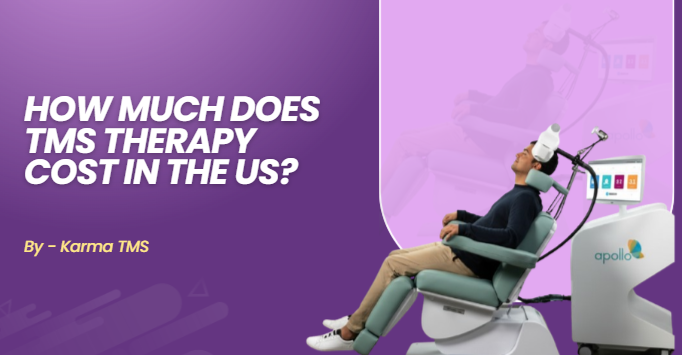
How Much Does TMS Therapy Cost in the US?
A breakdown of national TMS pricing, insurance guidelines, and long-term remission value.
Read More
Why TMS Works When Antidepressants Don't
Understand the neuroscience of treatment-resistant depression and why magnetic stimulation succeeds.
Read More
Does TRICARE Cover TMS Therapy?
Comprehensive eligibility criteria, pre-authorization, and cost details for military families.
Read More
About the Author
Dr. Keerthy Sunder
Board-Certified Psychiatrist | Medical Director, Karma TMS
Dr. Keerthy Sunder is an internationally recognized, board-certified psychiatrist with extensive expertise in neuromodulation, Transcranial Magnetic Stimulation (TMS), and integrative mental health care. He leads Karma TMS clinics across Palm Springs, Rancho Mirage, and Twentynine Palms, dedicated to helping patients overcome treatment-resistant mood disorders.