
When evaluating non-invasive depression treatments, one question tops almost every patient’s list: how long does TMS therapy last? Whether you are considering TMS therapy for yourself or a loved one, understanding the timeline is vital. TMS involves three critical time horizons: how long an individual daily treatment session takes, how many weeks a full treatment course spans, and how long the therapeutic benefits and remission last once treatment ends.
Unlike prescription antidepressants, which require daily oral dosing for months or years and often carry persistent side effects, TMS therapy for treatment-resistant depression works by directly retraining underactive neural circuits in the brain. Through cumulative magnetic stimulation, TMS fosters durable neuroplasticity, providing relief that continues long after the final session is completed.
In this detailed, physician-backed guide from Karma TMS in Palm Springs, we provide an answer-first breakdown of how long TMS therapy lasts across all three dimensions, detailed week-by-week expectations, research-backed longevity data, and guidance on maintaining your mental wellness over the long run.
At a Glance: How Long Does TMS Therapy Last?
For search engines and patients seeking immediate answers, here is the executive summary of TMS therapy durations based on clinical standards at our Palm Springs psychiatric center:
How Long Is an Individual TMS Therapy Session?
A single daily session of Transcranial Magnetic Stimulation (TMS) typically lasts between 18 and 36 minutes. The exact duration of your appointment depends on the clinical protocol selected for your condition by your psychiatrist.
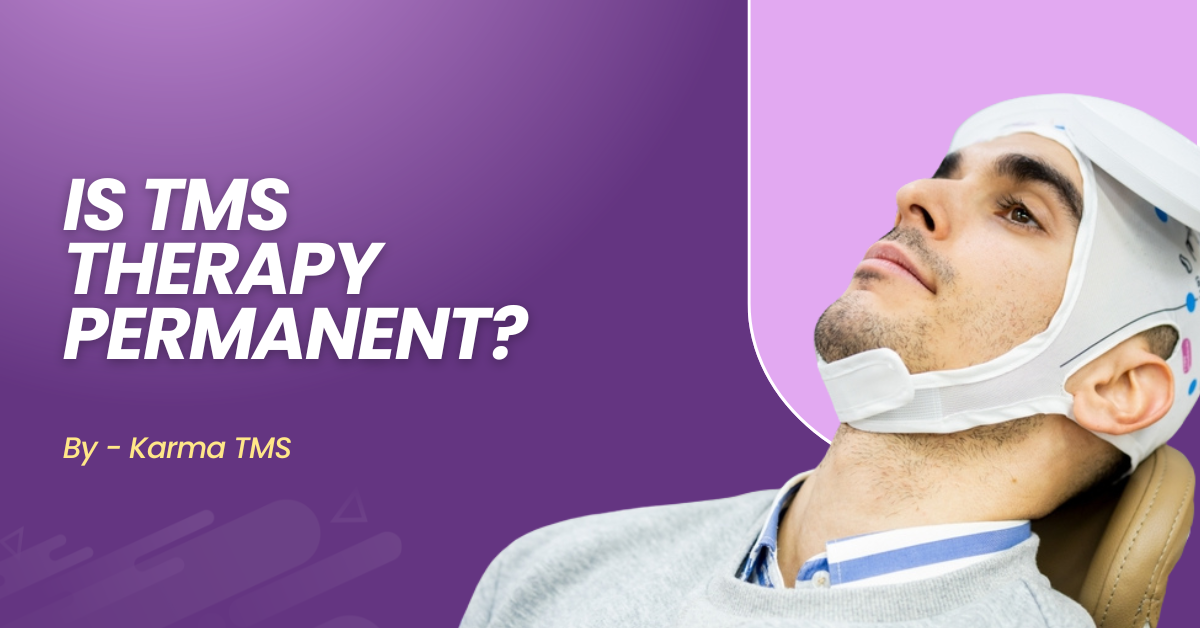
Unlike complex surgical procedures or electroconvulsive therapy (ECT), TMS is completely non-invasive and outpatient. You sit comfortably in a supportive treatment chair, awake and alert, while a specialized electromagnetic coil rests gently against your head.
Comparing TMS Session Protocols & Time Breakdown
- Standard rTMS (Repetitive TMS): 18 to 37 minutes per session. Uses pulsed magnetic fields targeted at the dorsolateral prefrontal cortex (DLPFC).
- Theta Burst Stimulation (TBS): 3 to 10 minutes per session. Uses rapid, high-frequency bursts that mimic natural brain rhythms to achieve equivalent therapeutic stimulation in a fraction of the time.
- Personalized TMS (PrTMS): 20 to 30 minutes. Utilizes low-amplitude, spectral EEG-guided pulse patterns customized to your individual brain wave data.
During those 20 to 30 minutes, you can read, listen to music, watch TV, or chat with your certified TMS technician. Because no anesthesia or sedation is required, there is zero recovery downtime. As soon as the session concludes, you can immediately drive home, return to work in Palm Springs, or resume your normal daily routine. For more detail on what happens inside your brain during treatment, read our guide on Your Brain on TMS.
How Long Is a Full TMS Treatment Course? (Week-by-Week Timeline)
A standard course of TMS therapy for depression consists of 36 total sessions delivered over 6 to 7 weeks. Treatment is conducted 5 days per week (Monday through Friday) for the first 6 weeks (30 sessions), followed by a 6-session gradual taper over weeks 6 and 7.
Why does TMS require multiple sessions over several weeks? Neural circuits affected by depression did not become dormant overnight, and restoring healthy synaptic strength requires repetitive, cumulative stimulation. According to peer-reviewed research documented on Wikipedia’s Transcranial Magnetic Stimulation repository, repeated stimulation triggers long-term potentiation (LTP)—the neurobiological mechanism that physically rewires brain networks for lasting health.
Week-by-Week TMS Treatment Expectations
Week 1 (Sessions 1–5): Mapping & Calibration
Your initial appointment includes a brain mapping session to pinpoint your precise motor threshold and treatment location. During early sessions, your body adapts to the light tapping sensation on your scalp.
What to expect: Mild scalp sensation or light headache post-session, which typically disappears within 30 minutes. Emotional changes are subtle or minimal at this stage.
Week 2 (Sessions 6–10): Neuroplasticity Acceleration
Magnetic pulses build cumulative momentum. Microscopic changes occur at the synaptic level as dormant brain regions begin receiving increased cerebral blood flow and glucose metabolism.
What to expect: Scalp discomfort resolves completely. Some patients notice slight improvements in sleep quality or mental clarity, though major mood shifts are still developing.
Weeks 3–4 (Sessions 11–20): The Response Window
This is the critical "turning point" for the majority of TMS patients. Family members and friends often notice subtle positive shifts—such as increased conversation, brighter facial expressions, or renewed interest in hobbies—before the patient fully recognizes them.
What to expect: Noticeable reduction in brain fog, decreased depressive heaviness, improved daily motivation, and less anxiety. For deeper insights into this phase, see our breakdown on how long TMS takes to work for depression.
Weeks 5–6 (Sessions 21–30): Clinical Response & Remission
The cumulative brain stimulation reaches therapeutic peak strength. Depressive symptoms continue to lift, and emotional resilience solidifies. Your psychiatrist reviews standardized rating scales (PHQ-9 / HAM-D) to quantify your progress.
What to expect: Sustained mood stability, enhanced cognitive focus, and substantial symptom relief or complete clinical remission.
Week 7 (Sessions 31–36): Tapering Phase
The final 6 sessions are stepped down gradually (e.g., 3 sessions in week 6/7, 2 sessions the next week, and 1 final session). This taper ensures your brain smoothly transitions into maintaining its newly established neural pathways without abrupt cessation.
What to expect: Consolidation of long-term gains and personalized discharge planning for ongoing mental wellness. Learn more about why TMS requires multiple sessions.
Wondering If TMS Is Right for You?
Take the first step toward long-lasting relief from depression. Speak with our board-certified psychiatric team in Palm Springs today.
How Long Do TMS Therapy Results & Remission Last?
Perhaps the most important aspect of how long TMS therapy lasts is the durability of relief after completing treatment. Clinical trial data shows that for the majority of patients, the benefits of TMS endure for 6 to 12 months, or even years following a single 36-session treatment course.
Major clinical studies, including landmark multi-center trials published by Dunner et al. and Janicak et al., evaluated long-term outcomes in patients with severe treatment-resistant depression:
Unlike prescription medications—where stopping the pill often causes rapid symptom rebound—TMS changes the underlying physical brain architecture. Because neuroplastic pathways are reinforced over 6 weeks of daily firing, the brain learns to maintain healthy serotonin and dopamine signaling naturally.
For a deeper exploration into whether results can be permanent, read our comprehensive article on Is TMS Therapy Permanent?.
How Long Do Side Effects of TMS Therapy Last?
Understanding how long TMS therapy lasts also requires looking at side effect duration. One of the greatest advantages of TMS therapy over medications is its exceptional safety and minimal side effect profile.
Duration of Common TMS Side Effects
- Scalp Discomfort / Tingling: Occurs only while pulses are active during the session. Scalp sensitivity typically disappears completely within the first 1 to 2 weeks of care as muscles acclimate.
- Mild Mild Headaches: Lasts 15 to 30 minutes after sessions during week 1 and responds readily to over-the-counter pain relievers like acetaminophen or ibuprofen.
- Light Fatigue: Some patients experience mild tiredness after early sessions; this resolves as your brain adapts.
- Zero Systemic Side Effects: TMS produces no weight gain, no sexual dysfunction, no memory loss, no insomnia, and no dry mouth—side effects commonly seen with oral antidepressants.
To review the full clinical safety profile and compare benefits versus risks, visit our guide on TMS Therapy Pros and Cons and TMS Therapy Side Effects.
Key Factors That Influence How Long TMS Results Endure
Why do some patients stay in remission for several years while others notice mild symptom creep after 9 to 12 months? Several evidence-informed factors influence the long-term endurance of TMS therapy:
Treatment Consistency
Attending all 36 scheduled sessions without long gaps ensures optimal synaptic stimulation and prevents breaking neuroplastic momentum.
Brain Mapping & Diagnostics
Using advanced diagnostic technologies like Brain Mapping (EEG) ensures ultra-precise coil targeting, yielding deeper and longer-lasting remission.
Sleep & Physical Lifestyle
Prioritizing 7 to 9 hours of restorative sleep, regular cardiovascular exercise, and balanced nutrition directly supports brain-derived neurotrophic factor (BDNF), prolonging brain health.
Ongoing Psychotherapy & Care
Combining TMS with cognitive-behavioral therapy (CBT) helps rewire thought patterns while TMS rewires neural circuits. Review our 4 A's of Stress Management for coping strategies.
Maintenance TMS & Relapse Prevention
If depressive symptoms begin to return months or years after your primary course, you do not have to start from square one. At Karma TMS Palm Springs, we offer personalized maintenance TMS and periodic booster sessions designed to protect your hard-won remission.
Maintenance TMS can involve periodic single sessions (e.g., once or twice a month) or a brief 5-to-10 session booster course if early signs of low mood emerge. Research shows that booster sessions rapidly restore full therapeutic benefits in over 80% of prior TMS responders.
Furthermore, most major insurance providers—including Medicare, Tricare, and commercial plans—cover re-treatment or booster TMS for patients who previously responded to care. Learn more on our TMS Insurance Coverage and TMS Therapy Costs pages.
Frequently Asked Questions About How Long TMS Therapy Lasts
Ready to Experience Long-Lasting Relief from Depression?
Don't let depression dictate your life. Discover how personalized TMS therapy at Karma TMS in Palm Springs can restore your mental wellness.
Related Articles
Is TMS Therapy Permanent?
Explore the long-term effectiveness of TMS and what to expect after completing treatment.
Read More
How Long Does TMS Take to Work?
A week-by-week breakdown of what to expect during TMS treatment and when results begin.
Read More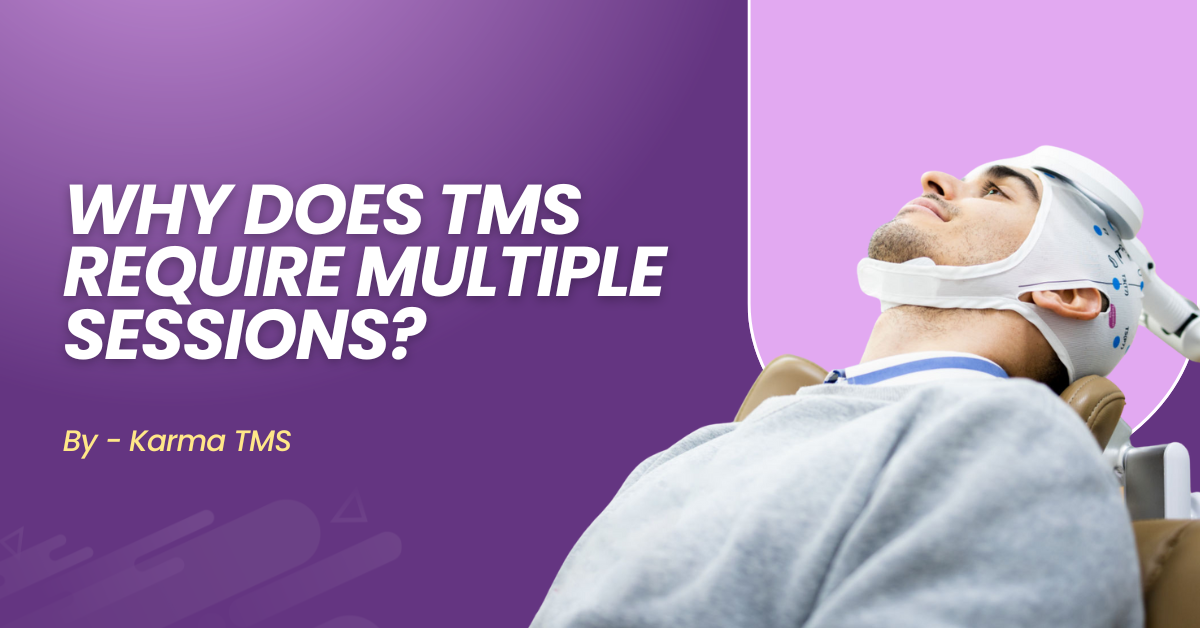
Why Does TMS Require Multiple Sessions?
Understand why repetitive sessions are required for neuroplasticity and lasting depression relief.
Read More
About the Author
Dr. Keerthy Sunder
Board-Certified Psychiatrist | Karma TMS
Dr. Keerthy Sunder is a board-certified psychiatrist specializing in TMS therapy and integrative psychiatry. He is passionate about bringing advanced, evidence-based treatments to the Palm Springs community to help patients achieve lasting mental wellness.