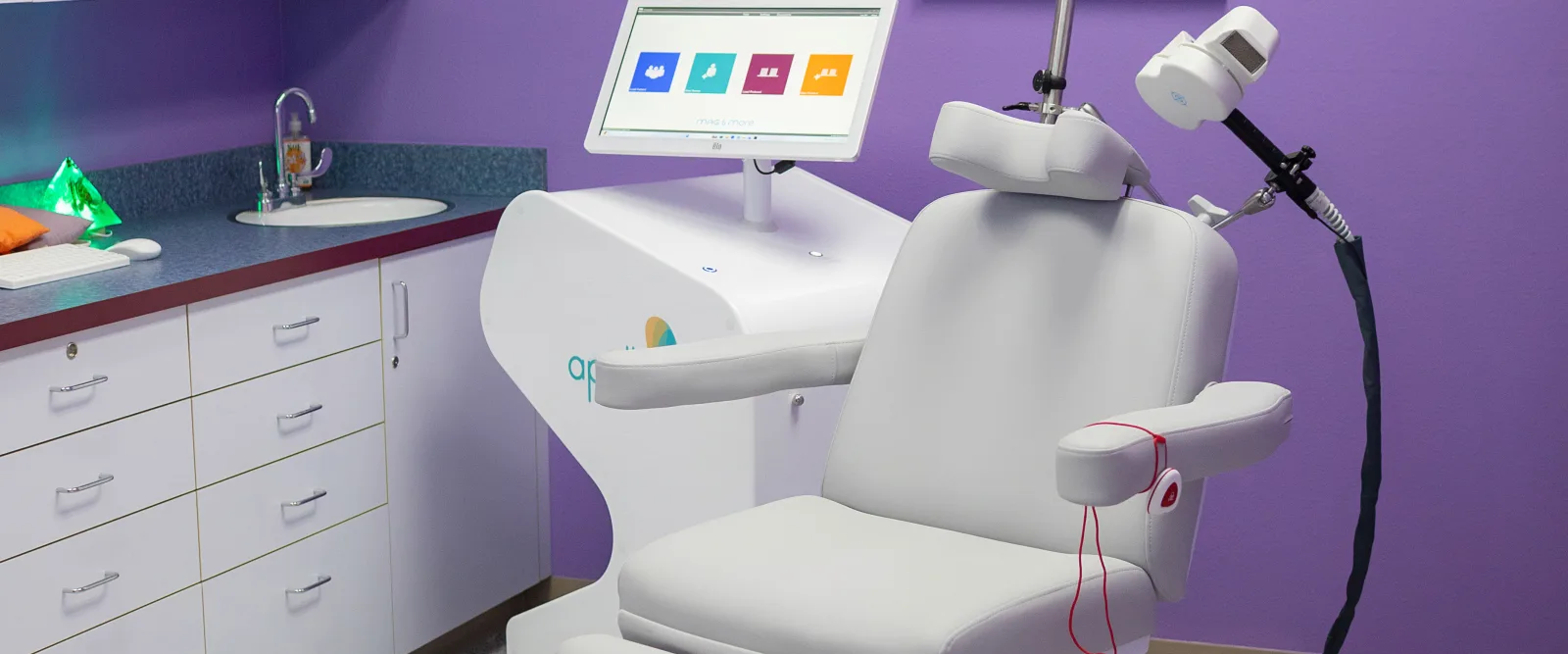
When you're struggling with clinical depression or chronic anxiety, finding the right treatment path can feel exhausting. If first-line interventions like medications and talk therapy haven't yielded the results you need, you might be considering Transcranial Magnetic Stimulation (TMS).
TMS is a non-invasive, FDA-cleared therapy that uses magnetic pulses to stimulate mood-regulating areas of the brain. To help you determine if this advanced therapy fits your lifestyle and recovery goals, this guide provides a transparent, evidence-based review of the **pros and cons of TMS therapy**. We will look at its clinical effectiveness, logisitcal aspects, comparisons to traditional alternatives, and details on how we personalize it at Karma TMS.
The Pros of TMS Therapy (Advantages)
TMS therapy offers several unique benefits compared to oral medications and more invasive procedures like ECT. These advantages have made it an increasingly popular choice for patients and psychiatrists alike.
High Success and Remission Rates
According to clinical studies, about 50% to 70% of patients with treatment-resistant depression experience significant relief, and up to 45% achieve complete remission. These statistics are documented on our TMS success rates page, showing that it succeeds where medication fails.
Drug-Free with No Systemic Side Effects
Unlike oral antidepressants, TMS does not enter the bloodstream. This means you completely avoid systemic issues like weight gain, sexual dysfunction, fatigue, nausea, or dry mouth. It allows you to continue your recovery without trading one set of problems for another.
Promotes Long-Term Brain Healing
By utilizing magnetic pulses to stimulate brain tissue, TMS promotes neuroplasticity—the brain's natural ability to grow new neural pathways and rewire itself for healthy emotional processing. Many patients enjoy durable results that can be sustained long-term, which we discuss in Is TMS Therapy Permanent?.
Non-Invasive with Zero Downtime
TMS requires no surgery, implants, anesthesia, or sedation. You remain fully awake, can read or watch TV during the 20-minute session, and can drive yourself home or back to work immediately afterward. It does not disrupt your daily activities.
Works Alongside Other Treatments
TMS can be combined with psychotherapy or ongoing medication. If you are currently undergoing medication management, TMS can act as a catalyst to help lower your pharmaceutical doses under psychiatric supervision.
Widely Covered by Insurance
Most major commercial health insurance carriers, Medicare, and TRICARE provide coverage for TMS therapy when eligibility requirements are met. You can review how to seek approval on our TMS Insurance Coverage page.
The Cons of TMS Therapy (Disadvantages)
While the advantages of TMS are substantial, patients must also consider the practical, logistical, and physical drawbacks of the treatment.
Significant Time Commitment
A typical TMS treatment course requires daily sessions (5 days a week) for 6 to 8 weeks. Commuting to a clinic every weekday represents a major scheduling challenge. Understanding this requirement is crucial, and we discuss the science behind why it is necessary in Why TMS Requires Multiple Sessions.
Mild Local Discomfort
During the session, the coil produces a rapid tapping sensation on the scalp. Some patients experience mild scalp irritation or a transient headache in the first week as they adjust. For more on managing side effects, see Is TMS Safe?.
Insurance Approval Criteria & Self-Pay Costs
Getting insurance approval requires proving that you have tried and failed multiple antidepressant medications (often 2 to 4) and talk therapy. For self-pay patients, the cost can be high. We outline the financial landscape in our guide, How Much Does TMS Cost? and on our Insurance & Pricing page.
Exclusion of Metal Implants
Because it uses strong magnets, anyone with ferromagnetic metal implants in or near their head cannot receive TMS. Be sure to check the full list of safety criteria on our TMS Therapy Contraindications page.
TMS vs. Antidepressants: Side-by-Side Comparison
To summarize the key differences, here is a direct comparison between TMS therapy and oral antidepressants:
| Feature | TMS Therapy | Antidepressants |
|---|---|---|
| Mechanism | Targeted magnetic pulses to specific brain networks. | Systemic chemical changes affecting the whole body. |
| Side Effects | Mild scalp tapping, temporary localized headache. | Weight gain, nausea, fatigue, sexual dysfunction. |
| Timeline | Daily for 6-8 weeks (then complete). | Taken daily indefinitely (often years). |
| Success Rate | 50-70% response in treatment-resistant cases. | Drops below 15% after failing 3+ medications. |
| Downtime | None (drive yourself immediately). | None (but requires daily dosing schedules). |
If you've struggled to find an antidepressant that works for you, you're not alone. Our detailed review, Why TMS Works When Antidepressants Don't, explains the neurology behind why electrical and magnetic stimulation succeeds where chemicals fail.
TMS vs. ECT: Clearing Up the Misconceptions
Many patients are hesitant about brain stimulation therapy because they confuse TMS with **Electroconvulsive Therapy (ECT)**, commonly known as "shock therapy."
In our article, Is TMS Shock Therapy?, we clear up this confusion. While both are brain stimulation techniques, they are fundamentally different:
- Anesthesia: ECT requires general anesthesia and muscle relaxants. TMS does not require any anesthesia, and you remain awake throughout.
- Seizures: ECT works by intentionally inducing a controlled seizure in the brain. TMS uses focused magnetic fields that do not induce seizures under normal parameters.
- Memory Loss: ECT carries a significant risk of temporary or permanent memory loss. TMS has no association with memory impairment or cognitive decline.
- Downtime: Following ECT, you require a recovery period and someone to drive you home. With TMS, you can immediately drive, return to work, or exercise.
Is TMS Right for You? How to Weigh the Choices
Deciding on TMS therapy comes down to weighing the daily time commitment against the promise of drug-free, long-term remission.
Consider TMS if:
- You have tried multiple medications without getting adequate relief.
- You struggle with medication side effects and want a drug-free approach.
- You can accommodate a 20-30 minute clinic visit daily for several weeks.
- You have health insurance that will cover the procedure (we work with commercial plans, Medicare, and TRICARE; see TRICARE Cover for TMS and Medicaid Cover for TMS).
For those looking for a highly customized treatment experience, we also offer personalized TMS (prTMS), which uses weekly EEG scans to map your natural brainwave frequency and adjust the stimulation coordinates. You can read more about how it works on our What is prTMS? guide.
Before initiating treatment, it is important to review details on is TMS therapy worth it to make sure it aligns with your expectations.

About the Author
Dr. Keerthy Sunder
Board-Certified Psychiatrist | KarmaTMS
Dr. Keerthy Sunder is a board-certified psychiatrist specializing in TMS therapy and integrative psychiatry. He is passionate about bringing advanced, evidence-based treatments to the Palm Springs community to help patients achieve lasting mental wellness.
Frequently Asked Questions
Explore TMS at Karma TMS
Ready to weigh the pros and cons for your specific situation? Contact our Palm Springs team for a comprehensive consultation.
Related Articles
Is TMS Therapy Worth It?
Read a transparent, evidence-based assessment of the real worth, success rates, and costs of TMS.
Read MoreIs TMS Covered by Insurance?
Learn about insurance approval criteria, commercial carriers, and coverage guidelines.
Read MoreTMS Therapy Contraindications
A complete safety screening list of absolute and relative contraindications for TMS.
Read More