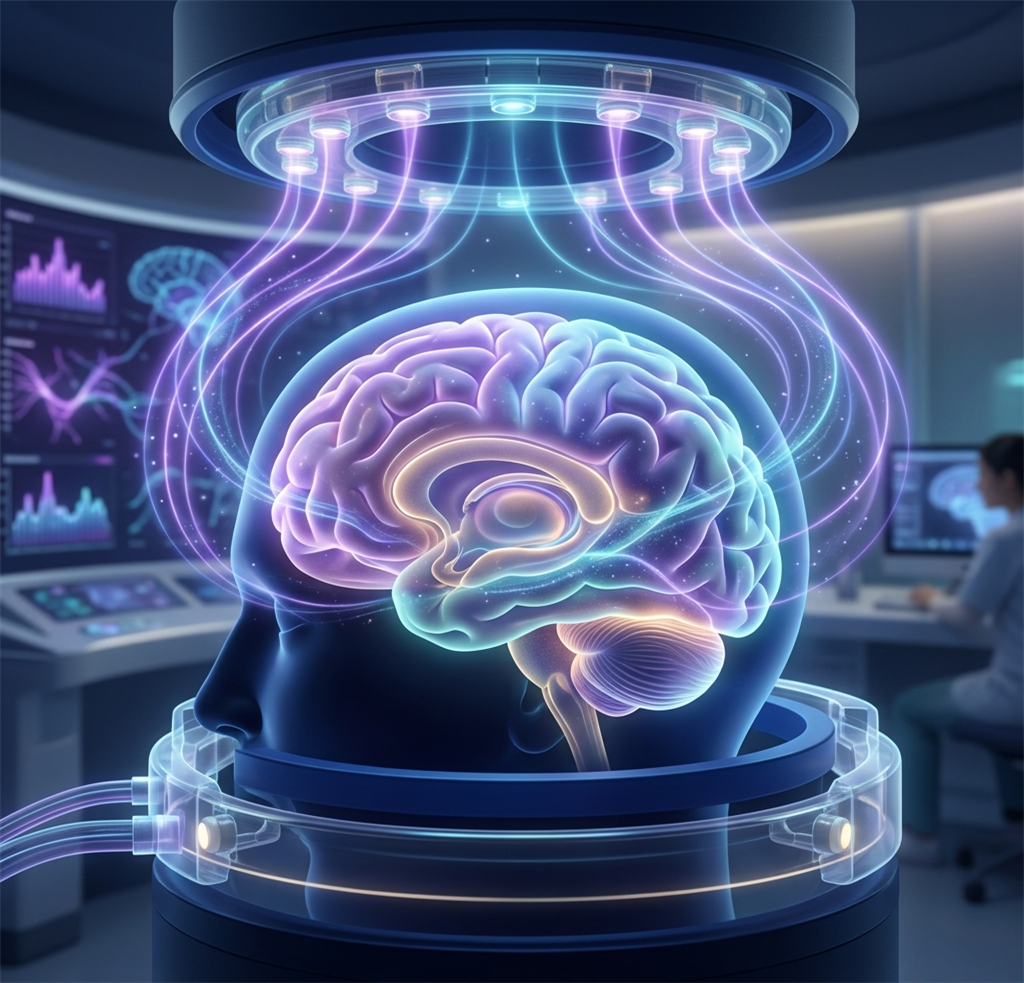
If you've been researching TMS therapy for depression, you may have encountered the phrase "shock therapy" — sometimes applied to TMS in online forums, outdated articles, or even well-meaning but misinformed conversations. That association is not just misleading; it's medically inaccurate, and it may be stopping people who need help from seeking it.
As a board-certified psychiatrist with over 30 years of experience, I want to set the record straight. TMS therapy is not shock therapy. Understanding the difference could be the difference between years of suffering and meaningful, lasting relief.
What Is TMS Therapy?
Transcranial Magnetic Stimulation (TMS) is a non-invasive, FDA-cleared treatment that uses precisely targeted magnetic pulses to stimulate specific areas of the brain involved in mood regulation — specifically the left dorsolateral prefrontal cortex.
Think of it like a physical therapy session for your brain. Just as a physical therapist uses targeted exercise to strengthen a specific muscle, TMS uses magnetic energy to strengthen specific neural pathways that have become underactive in conditions like depression and anxiety.
During a TMS session, a small coil is placed gently against the scalp. It emits brief magnetic pulses — similar in strength to an MRI machine — that pass through the skull and into the brain without causing pain or requiring any invasive procedure.
Key fact:
TMS does not enter the bloodstream, does not affect the whole body, and does not require sedation. Patients remain fully awake, alert, and comfortable throughout the 20-minute session.
Why Do People Call It "Shock Therapy"?
The confusion largely stems from two sources:
- Linguistic drift: The word "shock" has been loosely applied to any treatment involving electricity or magnetic energy. In common usage, it has become a catch-all term for brain stimulation — regardless of mechanism or intensity.
- ECT's legacy: The phrase "shock therapy" was historically associated with Electroconvulsive Therapy (ECT), an older procedure that does involve electrical current and sedation. Although modern ECT is far safer than its reputation suggests, the association with "shock" has unfairly colored public perception of all brain stimulation therapies.
"The fact that TMS gets conflated with ECT is one of the greatest barriers to patient adoption. They are as different as a treadmill is from open-heart surgery — both affect the body, but the mechanism, risk, and recovery are entirely unlike each other."
TMS vs. ECT: A Direct Comparison
Here's the most important comparison a patient can make:
ECT (Electroconvulsive Therapy) remains an important and effective treatment for severe, life-threatening psychiatric conditions — but it operates through an entirely different mechanism, requiring general anesthesia and inducing a controlled seizure. TMS is fundamentally different in every measurable way.
What Does TMS Actually Feel Like?
Patients often ask: "Will it hurt?" The honest answer is: most patients report a tapping or tingling sensation on the scalp during the pulse — a sensation that is unusual, but not painful. It is nothing like an electric shock.
During your first session at our Palm Springs or Rancho Mirage clinic, we determine your "motor threshold" — the precise magnetic intensity needed to produce a mild thumb twitch. This calibration ensures the treatment is both effective and comfortable at the lowest necessary dose.
- The tapping sensation is brief — each pulse lasts less than a second
- Discomfort typically decreases over the first week of treatment
- No anesthesia, no recovery room, no grogginess
- You can listen to music, read, or close your eyes during the session
- You drive yourself home immediately afterward
Learn more about what happens during a TMS session in our detailed guide to how long TMS therapy takes to work.
Who Benefits Most from TMS?
TMS is particularly valuable for individuals who:
- Have not responded adequately to antidepressant medications
- Experience significant medication side effects
- Want to avoid adding more psychiatric medication
- Are seeking treatment for treatment-resistant depression
- Are dealing with co-occurring anxiety or OCD
For veterans and military personnel struggling with PTSD and depression, TMS offers a non-invasive path to relief without the memory risks associated with other procedures.
Our Twentynine Palms location specifically serves the MCAGCC community with TMS therapy for PTSD and co-occurring depression.
The Real Safety Profile of TMS
After over 20 years of clinical use and more than 10 million TMS sessions performed in the United States alone, the safety record of TMS is well established. As outlined in our complete safety guide:
- No systemic side effects — unlike medications, TMS does not affect the liver, kidneys, or digestive system
- No dependency or withdrawal — unlike antidepressants, there is no tapering required
- No cognitive impairment — unlike ECT, TMS does not affect memory or concentration
- Minimal downtime — return to work, exercise, and daily activities immediately after
The most common side effects — mild scalp tenderness and transient headaches — are typically mild and resolve on their own within the first week.
Frequently Asked Questions About TMS vs. Shock Therapy
Final Thoughts
The fear of "shock therapy" has kept too many patients from accessing one of the most effective, well-tolerated treatments available for depression today. If the word "shock" is what's holding you back from exploring TMS, I hope this article has given you the clarity and confidence to take the next step.
TMS is not a last resort. It is a first-line option for patients who prefer a non-pharmacological approach — or for whom medications have not worked. TMS therapy is legitimate, evidence-based, and FDA-cleared.
At Karma TMS, every patient's journey begins with a thorough psychiatric evaluation to determine whether TMS is the right fit. We serve Palm Springs, Rancho Mirage, and Twentynine Palms.
Ready to Explore TMS — Not Shock Therapy?
Schedule a consultation and learn whether TMS is the right treatment for you. No shock. No anesthesia. Just targeted, evidence-based care.
Related Articles
Is TMS Therapy Safe? What Patients Should Know
A complete guide to the TMS safety profile, side effects, and how it compares to other treatment options.
Read More
Why TMS Requires Multiple Sessions
Understand the science of neuroplasticity and why a full course of TMS treatment is essential for lasting results.
Read More
Signs Your Depression Needs Professional Treatment
When self-help isn't enough — the key warning signs that it's time to see a psychiatrist.
Read More